
Best Espresso Machines in Canada
These are the 10 espresso machines Canadians are buying most on Amazon.ca right now, listed in best-seller order (checked November 16, 2026). Only products in stock on Amazon.ca at that time are included. They range from compact manual machines under $200 to fully automatic bean-to-cup machines that grind, brew and froth at the touch of a button. Each has a spec score out of 10, explained at the end of the page.
As an Amazon Associate, Shopazonic earns from qualifying purchases. Rankings follow Amazon.ca best-seller order at the date shown; check Amazon.ca for current price and availability.
Our top picks at a glance
Ranked by Amazon.ca best-seller order. Score = spec score out of 10. How we rank
-
1
 Best one-touch lattes De'Longhi Magnifica Evo
9.0/10 $599.98 at Amazon
-
2
 Cheapest bean-to-cup Philips 2200 Series EP2220/14
7.0/10 $549.99 at Amazon
-
3
 Easiest milk system to clean Philips 3300 Series with LatteGo
8.5/10 $599.99 at Amazon
-
4
 Best compact semi-automatic De'Longhi Classic Signature
4.0/10 $179.98 at Amazon
-
5
 Best semi-automatic with grinder under $600 De'Longhi La Specialista Arte Evo
8.0/10 View on Amazon
De'Longhi
De'Longhi Magnifica Evo
- Type: fully automatic bean-to-cup
- Grinder: conical burr, 13 settings
- Milk: LatteCrema automatic frother
- Recipes: 7 one-touch drinks
A fully automatic bean-to-cup machine: choose a drink on the colour display and it grinds, brews and froths milk for you.
Pros
- Grinds, brews and froths at the touch of a button
- Iced coffee recipe
- Dishwasher-safe milk parts
Cons
- Less control over each shot than a manual machine
- Milk container needs regular cleaning
PHILIPS
Philips 2200 Series EP2220/14
- Type: fully automatic bean-to-cup
- Grinder: 100% ceramic
- Milk: classic manual frother
- Drinks: espresso and coffee
One of the most affordable fully automatic machines: it grinds beans with a ceramic grinder and brews espresso or coffee at the touch of a button.
Pros
- Grinds and brews automatically
- Removable brew group is easy to rinse
- AquaClean filter and descaling alerts
Cons
- Only two drink types
- Milk is frothed by hand
Philips
Philips 3300 Series with LatteGo
- Type: fully automatic with grinder
- Drinks: 6 presets
- Milk: LatteGo automatic
- Filter: AquaClean
A fully automatic machine that grinds, tamps and brews at a touch, with 6 presets including iced coffee.
Pros
- One-touch grind, tamp and brew
- LatteGo has 3 parts and no tubes
- AquaClean filter cuts descaling
Cons
- Only 6 drinks
- Listing does not state temperature settings
De'Longhi
De'Longhi Classic Signature
- Pump: 15 bar
- Heating: Thermoblock, rapid heat-up
- Milk: dual-mode frother
- Presets: single and double shot
A compact De'Longhi with a Thermoblock heater for quick warm-up, a pressure gauge and one-touch single and double shots.
Pros
- Heats up quickly
- Saves your single and double shot sizes
- Height-adjustable drip tray fits tall glasses
Cons
- No grinder
- Frother is less powerful than a café wand
De'Longhi
De'Longhi La Specialista Arte Evo
- Type: semi-automatic with 15-setting grinder
- Milk: commercial-style steam wand
- Temperature: 3 settings
- Recipes: 4 presets including cold brew
A semi-automatic machine with a 15-setting grinder, a commercial-style steam wand and a dosing and tamping guide.
Pros
- Built-in grinder
- Dosing and tamping guide
- Cold brew in under 5 minutes
Cons
- Milk is frothed by hand
- Only 4 presets

De'Longhi
De'Longhi Stilosa
- Pump: 15 bar
- Milk: manual frother
- Water tank: 1 L
- Boiler: stainless steel
De'Longhi's entry-level manual espresso machine: a 15-bar pump, a stainless-steel boiler and a manual milk frother in a compact body.
Pros
- Low price from a big-name brand
- Small footprint
- Simple to use and clean
Cons
- No grinder
- Manual controls only, no presets

Breville
Breville Bambino Plus
- Type: semi-automatic, 54 mm portafilter
- Heat-up: about 3 seconds (ThermoJet)
- Temperature: PID-controlled
- Milk: automatic steam wand
A compact semi-automatic espresso machine that heats up in about 3 seconds and keeps the water at a steady temperature with PID control.
Pros
- Ready in about 3 seconds
- Hands-free milk texturing with adjustable temperature and foam
- Small footprint
Cons
- No built-in grinder
- Single and double shots only

De'Longhi
De'Longhi Dedica Duo
- Type: compact semi-automatic
- Presets: espresso, double espresso, cold brew
- Milk: My LatteArt steam wand
- Heating: thermoblock
A slim semi-automatic machine with presets for espresso, double espresso and cold brew, and a commercial-style steam wand.
Pros
- Cold brew in under 5 minutes
- Commercial-style steam wand
- Narrow footprint
Cons
- No grinder
- Only 3 presets

De'Longhi
De'Longhi La Specialista Touch
- Type: semi-automatic with guided grind and dose
- Drinks: 10 presets
- Milk: automatic steam wand, 5 froth levels
- Grinder: conical burr, 15 settings
A semi-automatic machine that guides you through grind, dose, pre-infusion and temperature on a touch display.
Pros
- Guides you through grind and dose
- Automatic milk frothing
- 10 preset drinks
Cons
- You still tamp by hand
- Pricier than basic semi-automatics
De'Longhi
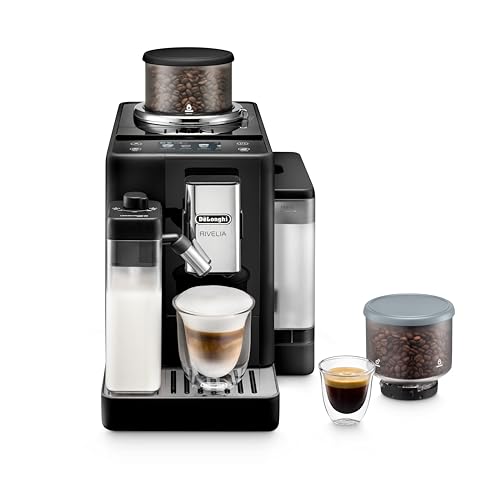
De'Longhi Rivelia
- Type: fully automatic with 13-setting burr grinder
- Drinks: 18 presets
- Milk: LatteCrema Hot, automatic
- Hoppers: two removable
A fully automatic machine with 18 one-touch drinks and two removable bean hoppers, so you can switch between regular and decaf.
Pros
- Swap between two bean hoppers
- 18 one-touch drinks
- Bean Adapt sets grind, dose and temperature
Cons
- About $1,300
- No cold milk foam
Buying guide
Manual, semi-automatic or fully automatic?
Manual and semi-automatic machines have a portafilter: you dose and tamp the coffee and steam milk yourself. They are cheaper and give you more control. Fully automatic (bean-to-cup) machines grind, tamp, brew and often froth milk at the touch of a button.
The grinder matters
Espresso needs a fine, consistent grind. Machines without a grinder need pre-ground espresso or a separate burr grinder, so budget for one. A built-in grinder saves counter space.
15 or 20 bar?
Espresso is brewed at around 9 bar; a 15 or 20 bar rating is the pump's maximum, not the brewing pressure. Pre-infusion and stable temperature (PID) make more difference than a higher bar number.
Milk drinks
A steam wand makes café-style microfoam but takes practice. Automatic milk systems are easier but have parts to clean after every use.
Hard water
Much of Canada has hard water, which scales up espresso machines. Use the water filter if one is included and descale when the machine asks.
How we rank and score
Ranking follows popularity: products are listed in their Amazon.ca Best Sellers order for Espresso Machines (checked November 16, 2026). Only products in stock on Amazon.ca at that time are included.
The score out of 10 is based on published specifications, not a hands-on test. Five criteria are worth up to 2 points each:
- Grinder: none = 0, built-in grinder = 2
- Milk: manual frother or steam wand = 1, automatic hands-free milk system = 2
- Temperature control: fixed = 1, adjustable or PID-controlled = 2
- Ease of use: fully manual = 0.5, shot presets = 1, assisted dosing and tamping = 1.5, fully automatic = 2
- Drink options (one-touch): 1–2 drinks = 1, 3–6 drinks = 1.5, 7 or more = 2
Frequently asked questions
Do I need a separate grinder?
Only if your machine has no built-in grinder and you want to use whole beans. Pre-ground espresso works but loses flavour within days of opening.
Can I make lattes and cappuccinos with these machines?
Yes. Every machine here can froth milk, either with a steam wand or frother you hold a jug under, or with an automatic milk system.
Are bean-to-cup machines worth the price?
If you want café drinks with no learning curve, yes. If you enjoy the craft and want the best shot for the money, a semi-automatic with a grinder is the better value.
How often should I descale?
Follow the machine's alert or manual. In hard-water areas that can be every one to two months; a water filter stretches it out.
More buying guides


Best Robot Vacuums in Canada
- roborock Qrevo S5V
- Lefant M210 Pro
- eufy C28 Omni


Best Security Cameras in Canada
- Tapo C200 Pan/Tilt Indoor Camera
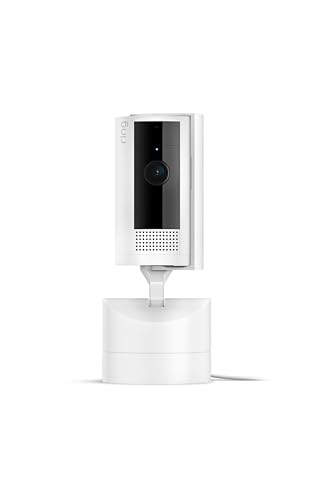
- Ring Pan-Tilt Indoor Cam
- Ring Outdoor Cam (Stick Up Cam) Battery


Best Outdoor Security Cameras for Canadian Winters
- Ring Outdoor Cam (Stick Up Cam) Battery
- Ring Outdoor Cam Plus, Battery
- Ring Floodlight Cam 2K, Wired